
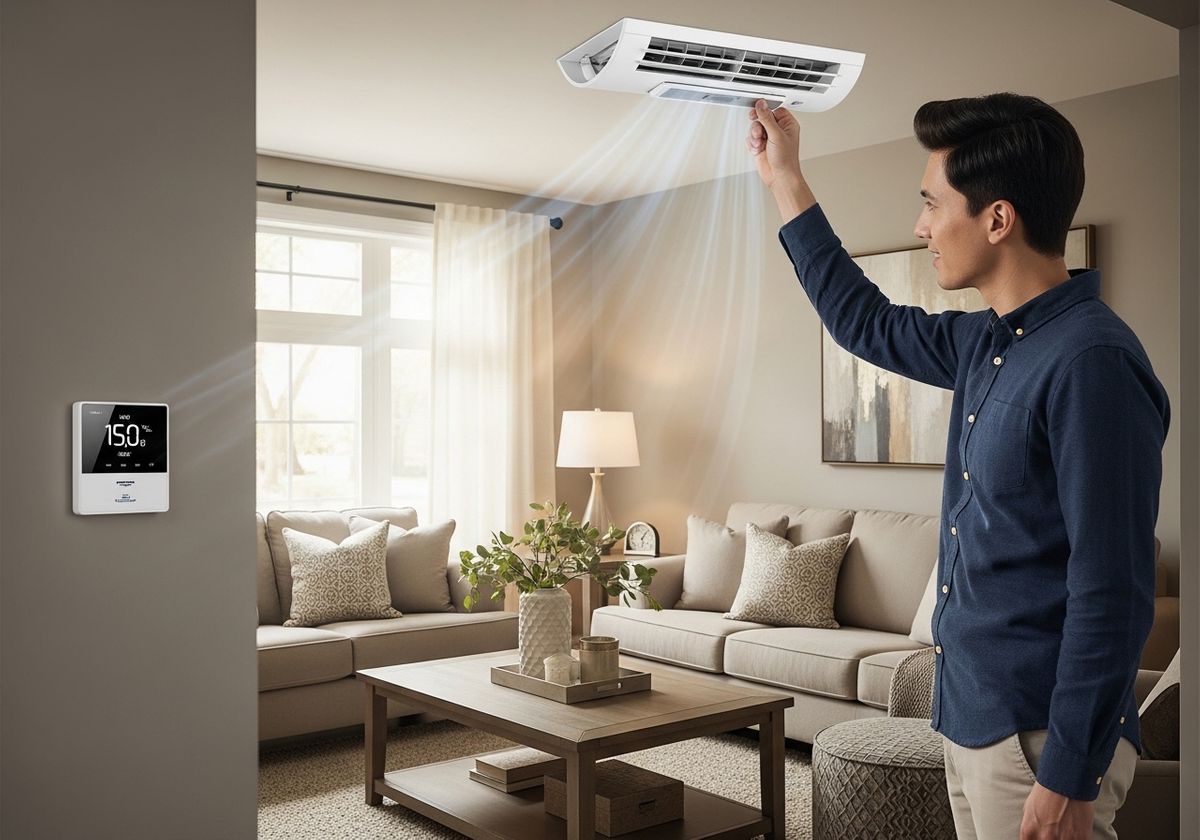
Have you ever noticed some rooms in your home or office are always too hot while others remain stubbornly cold? This common issue often stems from imbalanced airflow. Understanding the science behind airflow and how to properly balance your vents can significantly improve your comfort and energy efficiency.
The Basics of Airflow
Airflow within your HVAC system is governed by basic physics. Your HVAC unit pushes air through a network of ducts, and that air is distributed into different rooms through vents. Ideally, each room should receive the right amount of conditioned air to maintain a consistent temperature. However, several factors can disrupt this balance:
Ductwork Design: Poorly designed or installed ductwork can restrict airflow to certain areas.
Furniture Placement: Blocking vents with furniture can impede airflow.
Closed Doors: Closing doors can change the pressure in a room, affecting airflow.
Air Leaks: Leaky ducts can lose air before it reaches the intended rooms.
Identifying Imbalanced Airflow
The most obvious sign of imbalanced airflow is inconsistent temperatures throughout your space. Other indicators include:
High Energy Bills: Your HVAC system works harder to compensate for temperature differences.
Dusty Rooms: Uneven airflow can lead to increased dust accumulation in certain areas.
Noisy HVAC System: Restricted airflow can cause your system to work harder and make more noise.

Balancing Your Vents
Balancing your vents involves adjusting them to ensure each room receives the appropriate amount of airflow. Here’s a step-by-step guide:
Assess Each Room: Start by walking through each room and noting the temperature. Identify which rooms are too hot or too cold.
Adjust Supply Vents: In rooms that are too cold, open the supply vents (the vents that blow air into the room) wider. In rooms that are too hot, partially close the supply vents.
Adjust Return Vents: Return vents (the vents that draw air back into the HVAC system) should be open in every room, but you can make minor adjustments. Make sure return vents are not blocked by furniture or other obstructions.
Check for Obstructions: Ensure that furniture, rugs, or curtains are not blocking any vents.
Seal Air Leaks: Seal any visible air leaks in your ductwork using duct tape or mastic sealant.
Professional Assessment: If balancing the vents yourself doesn’t solve the problem, it may be time to call in a professional HVAC contractor.

The Benefits of Balanced Airflow
Properly balanced airflow offers numerous benefits:
Improved Comfort: Consistent temperatures throughout your space eliminate hot and cold spots.
Energy Savings: Your HVAC system operates more efficiently, reducing energy consumption and lowering your bills.
Extended HVAC System Life: Balanced airflow reduces strain on your system, potentially extending its lifespan.
Better Air Quality: Balanced airflow can help distribute air more evenly, improving indoor air quality.
Maintaining balanced airflow in your home or business is crucial for comfort, energy efficiency, and the longevity of your HVAC system. By understanding the principles of airflow and taking the steps to balance your vents, you can create a more comfortable and efficient environment. If you're in the Monongahela area and struggling with HVAC issues, remember Leezer Contracting is a local HVAC company you can trust. We offer comprehensive residential HVAC services and commercial HVAC services, including HVAC installation, maintenance, and repair. Contact us today for affordable, reputable HVAC services and let us help you achieve the perfect indoor climate!